
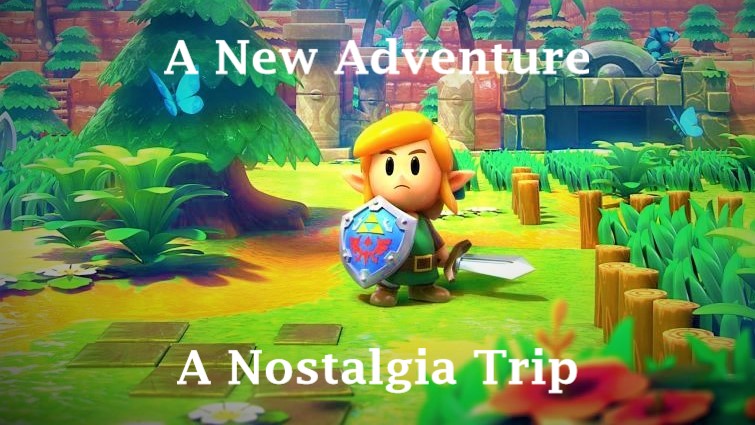
The Legend of Zelda: Link’s Awakening was released in 1993 for the original Game Boy. This game was the very first Zelda title I had ever owned and was my true introduction to the series as a whole. I was hooked on the franchise ever since. Even though many games in the series came before and after this one, it still holds a special place in my heart as I think most people’s first entry into a franchise does. With the announcement of a remake on the Switch, I was hyped to revisit Koholint Island again and for my little one to experience it all for the first time.
The Gamer’s Side
Gameplay
The gameplay of Link’s Awakening is very similar to the classic NES Zelda and Link to the Past. It is a top-down perspective with the player navigating an over-world and conquering dungeons. This remake kept the majority of the gameplay elements from the original with a few quality of life improvements. Now anyone who played the original Link’s Awakening will know that one of the most frustrating aspects of the game was having only two items slots. This meant that every time you switched items you had to pause the gameplay and go into the items screen. This isn’t an uncommon system however your sword or shield could only be used if they were also assigned to an item slot! This means that there are times when a player will have to sacrifice their attack or defense in order to defeat an enemy or solve puzzles. I usually ended up always keeping the sword on the A slot(almost everywhere had monsters after all) and used B for whatever item I needed at the time. Obviously this was frustrating, but as a 7 year-old kid at the time with no other video games, I didn’t really care. Going back to it recently makes me realize how much free time I don’t have as an adult.
The Switch remake has made all of this frustration disappear. The upgrade to newer hardware allows for greater control for the player and the developer took advantage of this. Both the sword and shield now have their own assigned controls completely separate from the 2 item slots. This means that balancing attacking and defending against enemies while solving the various puzzles is much easier. The gameplay as a whole feels smooth, intuitive, and easy to get a handle on, even for people new to the series. The menus are easy to navigate and, with the previously mentioned improvements, you will not spend large amounts of time using them.
The items themselves are each unique, adding new gameplay elements and greater ability to explore the world each time you find one. Each item can also have multiple applications. For example, bombs are great for damaging enemies from a distance but they are also used for breaking down cracked walls and opening secret areas. The hookshot is great for getting across large gaps but also stuns enemies when you strike them with it. However the problem is that the enemies themselves are easy to beat. Most standard monsters take two sword strikes to go down and that isn’t including the sword power-up that enemies sometimes drop or the optional upgraded sword. Both of these let you one shot most enemies. Because of this you do not usually need to use different strategies aside from hacking and slashing. The bosses are different in that they at least have certain interesting gimmicks or require certain items to defeat them. They also can take more damage which allows a player to implement some strategy.
When the player wants a break from the main gameplay, their are several mini games to enjoy, a fun and sometimes funny trading sequence to figure out, and collectible items to find throughout the world. All of these also offer the player enticing rewards that can help in the rest of the game, though they are not required. I found them to be a nice break between the dungeons and prevented the game from feeling too repetitive.
Story and Characters
So Link’s Awakening’s story moves completely away from what the series is commonly known for. It doesn’t even take place in Hyrule at all. Ganon, Princess Zelda, the Master sword and Triforce are all absent. Instead Link is shipwrecked on the mysterious Koholint island. You are found by a girl named Marin, a Zelda doppelganger(so much so that Link first thinks that she is Zelda) who found him on the beach. Once you wake up and recover your equipment you are greeted by an owl. The Owl helps drive the plot by explaining that Link has to gather the eight instruments from the eight nightmare dungeons around the island in order to wake an entity called the Wind Fish. Doing this will help Link to get back home. The owl is just one of the several unique and quirky characters on the island. Marin and the Owl are the two that you interact with the most with Marin in particular having some depth to her character. The rest of the island inhabitants while definitely adding wonderful charm and hilarious moments to the game, are pretty flat characters. In context with the story it actually makes sense why this is the case. There is Tarin, Marin’s Dad…Uncle…Friend… maybe…it isn’t really explained honestly. You will meet him exploring around the island and have to get him out of some ridiculous situations he gets into. You’ll run into a lady who owns a chain-chomp(yes like from Mario) that she treats like a dog. There is even a village full of anthropomorphic animals! The story itself actually explains why things are as strange as they are and the plot twist is interesting and quite melancholic for a Zelda title, but its better to play it and find out for yourself.
Graphics, Art & Sound Design
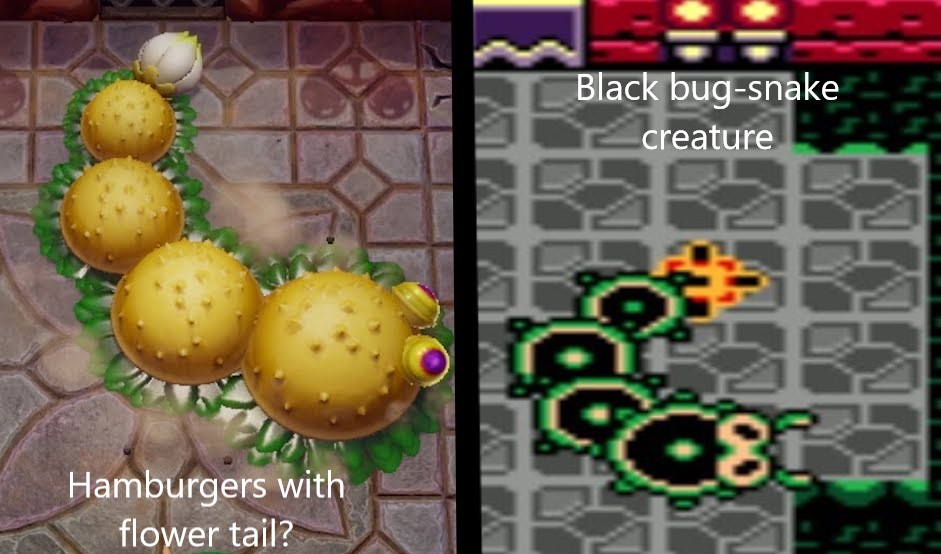
The art and sound design for this game are both a major upgrade from the original title while still bringing that nostalgic feeling. The art style is that of porcelain dolls on a type of diorama and it works well. The characters are able to be expressive while having a nice charm to them. However, I feel that this cute porcelain doll art style detracts from the monsters and bosses of the world. I know they aren’t meant to be scary in a Dark Souls kind of way but most of them do not give a feeling that they are an enemy. Most of them have lost their intimidating look and some do not even look like monsters at all. The nightmare bosses is where it this difference really shows. I remember the first nightmare boss to be this black snakelike creature and I was excited to see it with 16 years of hardware and software improvements. Instead it ended up looking like a bunch of hamburgers in a conga line. Very few of the bosses gave me the impression of “nightmare” even though that’s kind of their whole point.
The sound design is perfect in my opinion. I recognize all of the tracks from the original game but hearing them played by an full orchestra instead of the 8-bit sound of the Game Boy was even better than I expected! Even though I absolutely loved the original songs, I could not have imagined how beautiful each musical piece was. From the quaint Mabe Village theme, the eerie dungeon themes, to the classic Zelda over-world music. Not one of these remastered songs felt out-of-place or poorly done. In fact, I am going to be adding them to my collection of great video game soundtracks!
Final Gamer Side Thoughts
If you are looking for a fun and wacky Legend of Zelda adventure that’s easy to pick up, then Link’s Awakening is your game. It has fun gameplay, cute art design, great soundtrack, and a few plot surprises. Those desiring the classic Zelda story beats and feel will probably not enjoy this game as much as say “Link to the Past” or “Ocarina of Time”. Gamer’s desiring a good challenge or a deep story, this is not going to scratch that particular itch. However this strange and interesting world, its inhabitants, the mystery of the island and the Wind Fish will be a strong draw to many.
The Dad’s Side
So my daughter (she’s early elementary school age) started playing this game right when we had bought it. We had already played through Breath of the Wild and the majority of Majora’s Mask together so she was excited to play Link’s Awakening. The learning curve for the controls and menu navigation was almost non-existent and she was quickly exploring Koholint to her hearts content. She is one that does not like scary monsters or anything like that so in this sense the less intimidating style of the monsters and bosses were a major plus. This could definitely have been the direction the developers were going for. My daughter’s favorite thing to do by far is the claw machine mini-game in Mabe Village. You can get numerous prizes from new items, to more money, and more. Thankfully unlike a real claw machine, it’s not difficult to win prizes. Every time you leave and enter the building all of the items restock, so as you can imagine a lot of rupees have been used on this mini-game. She gets so excited every time she gets a prize and I smile each time she tells me about what she got. The various silly things you can do such as having an army of chickens attack you have her busting out in laughter. She has also really loves the music in the game. Sometimes she’ll be humming the tunes in the car or ask to hear them on my phone through YouTube. She has gotten invested in seeing what happens when you finally get all eight instruments to wake the Wind Fish. Overall, this game is great for kids around her age. Easy to get into, easy controls, nothing too scary, no blood(enemies die in a puff of smoke), great music, fun side mini-games, moments of silly fun, and a simple but engaging story that is easy to follow. I’d recommend it for parents to get for their kids.
 Dads and Games